Financing Indonesia's Waste-Free Future: Key Insights from the National FGD on Regional Waste Management
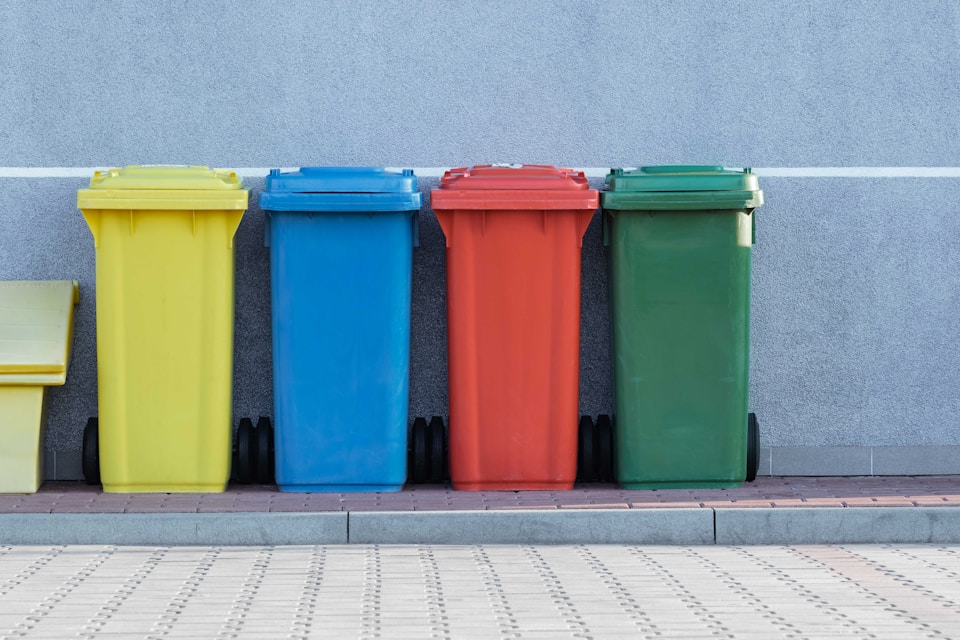
Indonesia faces a critical inflection point in its waste management trajectory. With only 32.28% of the nation's 36.78 million tons of annual waste properly managed,1 and regional governments allocating a mere 0.6% of their budgets to waste services,2 the country must fundamentally transform its financing approach to achieve the ambitious target of 100% waste management by 2029.3 A Focus Group Discussion convened by the Ministry of National Development Planning (Bappenas) on November 26, 2025, brought together the Ministry of Environment (KLHK), Ministry of Home Affairs (Kemendagri), and other stakeholders to chart a path forward. This policy brief synthesizes the key findings and recommendations from three presentations delivered at this pivotal forum, offering a comprehensive framework for efficient and sustainable regional waste management financing.
The Waste Management Financing Crisis
Indonesia's waste management sector suffers from a fundamental financing architecture problem that perpetuates inadequate service delivery. The Pusat Analisis Kebijakan dan Kinerja (PAKK) Bappenas presentation revealed that regional government budget allocations for waste management average only 0.64% of total APBD expenditure, falling dramatically short of the recommended 5-10% threshold.4 Even when considering broader environmental budget allocations, regional governments dedicate only approximately 1.72% of their budgets to environmental affairs, leaving waste infrastructure chronically underfunded.5
The consequences of this fiscal neglect manifest across Indonesia's waste landscape. Data from the Sistem Informasi Pengelolaan Sampah Nasional (SIPSN) maintained by KLHK indicates that while Indonesia generates 36.78 million tons of waste annually, proper management covers barely one-third of this volume.6 The remaining two-thirds either ends up in open dumps, is burned illegally, or pollutes waterways and marine environments.7
The current financing model demonstrates three critical structural weaknesses according to the Bappenas analysis.8 First, fiscal financing from APBN and APBD, including Dana Alokasi Khusus and Dana Insentif Daerah, proves unstable and insufficient because DAK allocations are not guaranteed annually, fragmenting long-term planning. Second, non-fiscal financing through KPBU, blended finance, CSR, green finance, and Extended Producer Responsibility remains underdeveloped because many waste management projects fail to achieve financial viability that would attract investors. Third, community-based financing through waste banks, cooperatives, and community self-help organizations operates at scales too small to meaningfully address systemic gaps.
The RPJMN 2025-2029 Mandate: 100% Waste Management
The Ministry of Environment presentation articulated the stark challenge facing Indonesia. The RPJMN 2025-2029 mandates that 100% of waste must be properly managed by 2029, meaning 100% collection coverage, 100% processing at treatment facilities, and only residue entering sanitary landfills.9 With fewer than five years remaining and massive infrastructure gaps persisting, conventional APBN and APBD financing cannot possibly close the investment deficit. The solution, according to KLHK, lies in enabling regions to access bankable financing that does not burden state budgets.10
The infrastructure requirements to achieve this target are substantial. KLHK's calculations indicate total capital expenditure (CAPEX) needs of approximately Rp 101.8 trillion, with annual operational expenditure (OPEX) requirements of roughly Rp 19.5 trillion.11 Breaking this down by facility type reveals the scale of the challenge: 10 Waste-to-Energy (WtE) facilities with capacity exceeding 1,000 tons per day require approximately Rp 31 trillion in capital investment; 133 TPST RDF facilities at 150 tons per day capacity demand Rp 17.3 trillion; 488 TPST non-RDF facilities at 120 tons per day require Rp 44.5 trillion; 2,508 TPS 3R and Waste Bank facilities need Rp 3.5 trillion; and 3,641 biogas installations require Rp 5.5 trillion.12
The financing pathway for these investments varies by facility type and scale. Danantara, Indonesia's newly established sovereign wealth fund, is positioned to finance large-scale WtE and TPST RDF facilities.13 APBD and Dana Desa can support TPST non-RDF and biogas installations at the regional level. APBN combined with village cooperative financing through Koperasi Desa Merah Putih can underwrite TPS 3R and waste bank infrastructure at the community scale.14
The Regulatory Foundation for Sustainable Financing
All three presentations emphasized that Indonesia possesses the regulatory infrastructure necessary to transform waste management financing, though implementation gaps persist. The foundational legal architecture begins with Undang-Undang No. 18 Tahun 2008 on Waste Management, establishing government authority and citizen responsibility for waste reduction and handling.15 PP No. 81 Tahun 2012 elaborates implementation requirements for household and similar waste management.16
Perpres No. 97 Tahun 2017 established the Jakstranas framework for national waste management policy and strategy, while Perpres No. 83 Tahun 2018 addresses marine debris.17 The recently enacted Perpres No. 109 Tahun 2025 updates the earlier Perpres No. 35 Tahun 2018, providing enhanced frameworks for waste-to-energy development.18 At the ministerial level, Permendagri No. 7 Tahun 2021 establishes procedures for calculating waste management retribution tariffs that can approach cost recovery, while PMK No. 26 Tahun 2021 authorizes APBN support mechanisms for regional waste management.19
The Ministry of Home Affairs presentation highlighted the significance of Permendagri 7/2021 as an instrument for achieving fair and cost-recovery-oriented tariff structures.20 The regulation mandates that retribution tariffs account for service provision costs, community ability to pay, equity principles through the polluter-pays principle, and effectiveness in controlling behavior.21 Critically, the regulation directs that retribution proceeds should prioritize funding activities directly related to waste handling operations.22
Multi-Stakeholder Financing Architecture
Academic literature and international experience confirm that sustainable waste management financing cannot depend on single-source funding. The Bappenas presentation, drawing on research from Ezeudu and Bristow (2025), emphasized that financing must be constructed as multi-stakeholder financing combining public, private, and community instruments.23 The UNEP and ISWA Global Waste Management Outlook (2024), as cited in the Bappenas presentation, similarly concludes that transformation toward zero-waste and circular economy systems requires innovative financing supported by economic instruments.24
Several financing instruments merit scaling across Indonesia according to the Bappenas analysis. The Pay-As-You-Throw (PAYT) scheme, documented by Nonomura et al. (2025) and Ukkonen and Sahimaa (2021), establishes performance-based tariffs where households and industries pay according to waste volume generated.25 Results-based financing (RBF), as described by the World Bank (2019), ties disbursements to verified outcomes such as service expansion, landfill diversion, or recycling rate improvements.26 Blended finance and green finance mechanisms, including green bonds and climate funds documented by OECD (2015, 2022), can bridge infrastructure funding gaps.27
The institutional architecture for channeling these financing flows involves multiple agencies as outlined by the Ministry of Environment.28 PT SMI and PT PII can provide medium-to-long-term financing, project preparation facilities, investment and risk assessments, government guarantees for high-risk projects, and bankability acceleration support. BPDLH (Badan Pengelola Dana Lingkungan Hidup) can channel performance-based green financing, grants, and blended grants while integrating CSR and international donor funds onto a unified platform.29 Local governments must partner with these institutions through feasible and bankable master plans (Rencana Induk Pengelolaan Sampah or RIPS).30
The Retribution Reform Imperative
The Kemendagri presentation underscored that waste management funding in cities and regencies cannot rely on APBD to achieve 100% service coverage and proper management.31 With APBD typically allocating 80% to personnel costs and priority sectors like economics, health, education, and infrastructure, and only 20% available for 33 concurrent government affairs including sanitation at 0.6%, the mathematics simply does not work.32 APBD proves incapable of building infrastructure coverage (CAPEX) or financing operational service delivery (OPEX).33
The solution requires reforming retribution systems based on Permendagri 7/2021 principles according to the Ministry of Home Affairs.34 Tariffs should achieve full cost recovery calculated based on ideal waste management needs. Collection mechanisms should achieve 100% compliance through cashless, single-window payment systems. Transparency should enable monitoring and tracking of all transactions. The entirety of retribution revenue should be reinvested in waste management infrastructure and operational costs.35
Illustrative calculations from West Java regions demonstrate the gap between current tariffs and cost-recovery requirements.36 In Kabupaten Bandung, current household tariffs of Rp 4,000-8,000 per month should increase to Rp 6,591-40,782 to approach cost recovery, representing increases of 65% to 410%. Kota Bandung shows even larger gaps, with current tariffs of Rp 3,000-20,000 requiring adjustment to Rp 7,646-112,424, increases ranging from 142% to 155%. Kabupaten Bandung Barat's analysis revealed the most dramatic shortfall, with required increases from 6% to 1,597% depending on household category.37
Collective retribution collection through integration with electricity bills (PLN), water bills (PDAM), or property tax (PBB) offers advantages according to Kemendagri analysis including improved efficiency and payment convenience, increased compliance and regional revenue, reduced administrative and collection costs, minimized leakage and corruption through digital recording, and support for smart city digitalization programs.38 However, implementation challenges include potential public resistance without proper socialization, equity and proportionality concerns requiring classification mechanisms based on building area, household size, or zonation, technical and infrastructure requirements for interoperable information systems, and dependency on third-party system reliability.39
Institutional Framework and Ministerial Roles
Effective waste management financing requires coordinated action across multiple ministries and levels of government as mapped in the Bappenas presentation.40 The Ministry of Environment serves as the primary regulator, formulating national policy and Jakstrada guidelines while providing funding through APBN, environmental grants, and DAK for environmental affairs. The Ministry of Home Affairs guides and synchronizes RPJMD-APBD alignment for waste sectors while encouraging strengthened APBD allocations and Bappeda-DLH coordination.41
The Ministry of Public Works constructs regional TPA infrastructure, TPS3R facilities, and sanitary landfills through APBN Ditjen Cipta Karya funding and KPBU schemes.42 The Ministry of Finance designs innovative financing instruments including thematic DAK, green incentives, KPBU, and Viability Gap Funding while managing transfers to regions, grants, and KPBU financing. Bappenas synchronizes cross-ministerial funding with RPJMN-SDGs alignment and serves as a facilitator for planning and blended finance schemes.43
The Ministry of Industry and Ministry of Cooperatives contribute to circular economy development and recycling industry capacity building through industry incentive schemes and recycling MSME financing.44 The Ministry of Energy and Mineral Resources can support waste-to-energy development including WtE projects through renewable energy grants and KPBU support for facilities like PLTSa. The Ministry of Health strengthens behavior change toward clean living, sanitation triggering, and waste reduction education through DAK Non-Fisik allocations.45
Three Transformational Changes for Regional Leaders
The Ministry of Environment presentation identified three fundamental changes that must be led by regional heads (Bupati and Walikota) to transform waste management outcomes.46 First, law enforcement at the city and regency level must condition the waste governance ecosystem, including mandatory waste sorting, requirements for commercial zones to build processing facilities, proper waste service utilization, prohibitions on illegal dumping and burning, appropriate retribution payments, and EPR implementation.47
Second, regions must establish public service enterprises for waste management that separate regulatory and operational functions.48 Operator forms can include BLUD (Badan Layanan Umum Daerah), BUMD (Badan Usaha Milik Daerah), or KPBU arrangements. This separation enables professional management, transparent financial accounting, and performance accountability distinct from government bureaucracy.49
Third, preparation of bankable Rencana Induk Pengelolaan Sampah (Waste Management Master Plans) enables governments and operators to access financing from financial institutions to build 100% infrastructure without depending on APBN, APBD, or grants.50 Subsequently, providing good and integrated waste management services creates conditions where communities are willing to pay fair service tariffs based on volume and economic capacity.51
Collaborative Financing Schemes
The Ministry of Environment presented several collaborative financing scheme designs currently under development.52 The comprehensive scheme envisions funding alliances between sovereign investors, institutional investors, and government entities channeling resources through PT SMI, PT PII, and BPDLH to implementing business entities (joint ventures between private companies and regional enterprises) that construct holding waste banks, TPS 3R, TPST non-RDF, TPST RDF, and TPA facilities serving off-takers for processed products.53
For larger TPST non-RDF, TPST RDF, and TPA facilities, financing flows through PT SMI and PT PII under a joint ministerial decree (SKB) framework coordinated by KLHK, Kemenkeu, Bappenas, Kemen PU, and Kemendagri.54 The implementing business entity conducts preparation and operational investment while the offtaker provides market certainty for processed outputs.55
For smaller-scale holding waste banks and TPS 3R facilities, BPDLH channels performance-based green financing and blended grants to joint venture implementing entities.56 These facilities can be financed through regional APBD, Dana Desa, and cooperative structures serving local off-takers for recycled materials and compost products.57
The TPS 3R acceleration roadmap envisions four phases according to the Ministry of Environment.58 Phase one from November to December 2025 focuses on policy synchronization and legal framework development including regulations, SKB, location synchronization, technical guidelines, institutional structure, feasibility assessment, and village commitments. Phase two in 2026 emphasizes construction, revitalization, institutional strengthening, offtaker engagement, and human resource training. Phase three from 2027 to 2028 pursues national expansion, capacity strengthening, circular economy cluster formation, and digital integration. Phase four from 2028 to 2029 consolidates financial sustainability, green financing, and institutional permanence.59
Best Practices and Lessons Learned
Domestic best practices from Surabaya, Banyumas, Gianyar, and Lamongan demonstrate governance patterns prioritizing government-community-private collaboration through local institutional strengthening, processing technology innovation, and community-based or BLUD operational models.60 Financing combines APBD, APBN, retribution, CSR, KPBU, and revenue from processing enterprises like RDF and maggot production. These practices confirm that institutional integration, financing diversification, and community participation are keys to success.61
International lessons from Japan, South Korea, Germany, Sweden, Vietnam, the United States, China, and New Zealand show that both developed and developing countries apply modern technology-based waste governance with source separation, EPR, and WtE systems alongside integrated regional management models.62 Financing mechanisms range from PAYT schemes, cost-sharing, landfill taxes, green financing, PPP/KPBU, to government subsidies for recycling and WtE facilities.63 Key lessons for Indonesia include the necessity of strong regulations and integrated governance, financing diversification, EPR strengthening, and fiscal and technological instruments driving service efficiency and sustainability.64
Policy Recommendations
Based on the synthesis of presentations from this FGD, five recommendation clusters emerge for advancing efficient and sustainable regional waste management financing in Indonesia.
The first cluster addresses fiscal restructuring and governance as proposed by Bappenas.65 Regional governments should allocate a minimum of 3% of APBD to waste management, significantly above the current 0.6% average. Ring-fencing of retribution revenue should ensure at least 80% returns directly to waste services. Digitalization of retribution payments should improve collection efficiency and transparency. Harmonization of DAK and Dana Insentif Daerah should align with regional readiness and service performance criteria.66
The second cluster focuses on innovative financing instruments.67 Establishment of a National Waste Fund managed by BPDLH and regional pool funds managed by BLUD would institutionalize financing flows. Utilization of green bonds and municipal bonds could mobilize capital market financing. Expansion of KPBU for PLTSa, RDF, and regional TPST with viability gap funding and performance-based contracts would leverage private capital and expertise.68
The third cluster strengthens non-fiscal financing roles.69 Full implementation of Extended Producer Responsibility schemes would shift financing burden to producers. Strengthening CSR and blended finance for recycling and WtE projects would diversify funding sources. Microcredit and revolving funds for cooperatives, waste banks, and waste sector MSMEs would support community-scale enterprise development.70
The fourth cluster addresses institutional strengthening and accountability systems.71 Formation of BLUD Persampahan entities would professionalize operational management. Application of results-based financing linking DAK and DID to service outcomes and SIPSN data would create performance incentives. Integration of financing data from APBD, retribution, CSR, and EPR sources with the SIPSN platform would enable comprehensive monitoring.72
The fifth cluster implements incentive and disincentive policies.73 Green fiscal incentives including tax reductions and soft credit for recycling industries and high-performing regions would reward positive behaviors. Disincentives through tariff adjustments and administrative sanctions for regions with poor waste management performance would discourage underperformance.74
Conclusion
Indonesia's journey toward a waste-free future requires nothing less than a paradigm transformation in how the nation finances and governs its waste management systems. The FGD presentations make clear that the current model, dominated by inadequate APBD allocations and fragmented programming, cannot achieve the 2029 target of 100% waste management. The Rp 101.8 trillion infrastructure investment requirement and Rp 19.5 trillion annual operational costs demand financing approaches that transcend traditional budget dependence.75
The regulatory foundations exist through UU 18/2008, Permendagri 7/2021, PMK 26/2021, and supporting regulations.76 The institutional mechanisms through PT SMI, PT PII, BPDLH, and emerging joint ministerial coordination frameworks provide channels for innovative financing.77 Domestic and international best practices demonstrate that success requires institutional integration, financing diversification, and active community participation.78
What remains is political will and coordinated execution. Regional leaders must champion law enforcement, institutional separation, and bankable master plan preparation.79 National ministries must harmonize their roles and financing instruments through the proposed joint ministerial decree framework. The private sector must be engaged through properly structured KPBU arrangements and EPR implementation. Communities must accept the reality that adequate waste management services require cost-recovery tariffs, albeit structured with equity provisions for vulnerable households.80
The presentations delivered at this Bappenas FGD provide a comprehensive roadmap for this transformation. Implementation in the remaining years to 2029 will determine whether Indonesia achieves its waste management ambitions or continues struggling with the environmental, health, and economic costs of inadequate systems. The choice, and the responsibility, rests with policymakers and stakeholders across all levels of government and society.
Footnotes
Presentation Sources
This policy brief synthesizes three presentations delivered at the Focus Group Discussion on Regional Waste Management Financing held in Jakarta on November 26, 2025:
1. PAKK Bappenas Presentation
"Pengembangan Skema Pembiayaan Pengelolaan Sampah Daerah yang Efisien dan Berkelanjutan" (Developing Efficient and Sustainable Regional Waste Management Financing Schemes)
Pusat Analisis Kebijakan dan Kinerja, Kementerian PPN/Bappenas
11 pages
2. Ministry of Environment Presentation
"Penguatan Kebijakan Penanganan Persampahan di Daerah" (Strengthening Waste Management Policy in Regions)
Direktorat Penanganan Sampah, Deputi Bidang Pengelolaan Sampah, Limbah dan B3, Kementerian Lingkungan Hidup/Badan Pengendalian Lingkungan Hidup
22 pages
3. Ministry of Home Affairs Presentation
"Pendanaan Pengelolaan Sampah dengan Retribusi Kebersihan dan Skema Pembiayaan Lainnya" (Waste Management Funding through Cleanliness Retribution and Other Financing Schemes)
Direktorat Pendapatan Daerah, Direktorat Jenderal Bina Keuangan Daerah, Kementerian Dalam Negeri
13 pages
Access Full Presentations:
Google Drive - FGD Pembiayaan Sampah Materials
Additional materials available at: https://link.bappenas.go.id/FGD_Pembiayaan_Sampah
About CRPG
The Center for Regulation, Policy and Governance (CRPG) is a research center based at the Law Faculty of Ibn Khaldun University Bogor, dedicated to advancing evidence-based policy research on regulation and governance in Indonesia.
Location: Law Faculty Ibn Khaldun University Bogor, Jl. Sholeh Iskandar KM 1, Bogor, Indonesia
Website: https://crpg.info
This policy brief provides an independent synthesis of government presentations for policy research purposes.
- Pusat Analisis Kebijakan dan Kinerja (PAKK) Bappenas, "Pengembangan Skema Pembiayaan Pengelolaan Sampah Daerah yang Efisien dan Berkelanjutan," presented at FGD Pembiayaan Sampah, Jakarta, November 26, 2025, p. 2, citing Data SIPSN KLHK 2024. ↩
- PAKK Bappenas, "Pengembangan Skema Pembiayaan," p. 2. ↩
- Direktorat Penanganan Sampah, Kementerian Lingkungan Hidup, "Penguatan Kebijakan Penanganan Persampahan di Daerah," presented at FGD Pembiayaan Sampah, Jakarta, November 26, 2025, p. 3. ↩
- PAKK Bappenas, "Pengembangan Skema Pembiayaan," p. 6, citing Budiyarto (2022), Anugrah et al. (2020), Kemendagri (2019), Stop Ocean Plastics (2023). ↩
- PAKK Bappenas, "Pengembangan Skema Pembiayaan," p. 6. ↩
- PAKK Bappenas, "Pengembangan Skema Pembiayaan," p. 2, citing Data SIPSN KLHK 2024. ↩
- Direktorat Penanganan Sampah KLHK, "Penguatan Kebijakan Penanganan Persampahan," p. 6, citing Waste4Change (2025). ↩
- PAKK Bappenas, "Pengembangan Skema Pembiayaan," p. 6. ↩
- Direktorat Penanganan Sampah KLHK, "Penguatan Kebijakan Penanganan Persampahan," p. 3. ↩
- Direktorat Penanganan Sampah KLHK, "Penguatan Kebijakan Penanganan Persampahan," p. 6. ↩
- Direktorat Penanganan Sampah KLHK, "Penguatan Kebijakan Penanganan Persampahan," p. 4. ↩
- Direktorat Penanganan Sampah KLHK, "Penguatan Kebijakan Penanganan Persampahan," p. 4. ↩
- Direktorat Penanganan Sampah KLHK, "Penguatan Kebijakan Penanganan Persampahan," p. 4. ↩
- Direktorat Penanganan Sampah KLHK, "Penguatan Kebijakan Penanganan Persampahan," p. 3-4. ↩
- Direktorat Penanganan Sampah KLHK, "Penguatan Kebijakan Penanganan Persampahan," p. 2; PAKK Bappenas, "Pengembangan Skema Pembiayaan," p. 5. ↩
- PAKK Bappenas, "Pengembangan Skema Pembiayaan," p. 5. ↩
- Direktorat Penanganan Sampah KLHK, "Penguatan Kebijakan Penanganan Persampahan," p. 2. ↩
- Direktorat Penanganan Sampah KLHK, "Penguatan Kebijakan Penanganan Persampahan," p. 2. ↩
- PAKK Bappenas, "Pengembangan Skema Pembiayaan," p. 5. ↩
- Direktorat Pendapatan Daerah, Kemendagri, "Pendanaan Pengelolaan Sampah dengan Retribusi Kebersihan dan Skema Pembiayaan Lainnya," presented at FGD Pembiayaan Sampah, Jakarta, November 26, 2025, p. 6. ↩
- Direktorat Pendapatan Daerah Kemendagri, "Pendanaan Pengelolaan Sampah," p. 4. ↩
- Direktorat Pendapatan Daerah Kemendagri, "Pendanaan Pengelolaan Sampah," p. 4. ↩
- PAKK Bappenas, "Pengembangan Skema Pembiayaan," p. 4, citing Ezeudu & Bristow (2025). ↩
- PAKK Bappenas, "Pengembangan Skema Pembiayaan," p. 4, citing UNEP & ISWA (2024). ↩
- PAKK Bappenas, "Pengembangan Skema Pembiayaan," p. 4, citing Nonomura et al. (2025) and Ukkonen & Sahimaa (2021). ↩
- PAKK Bappenas, "Pengembangan Skema Pembiayaan," p. 4, citing World Bank (2019). ↩
- PAKK Bappenas, "Pengembangan Skema Pembiayaan," p. 4, citing OECD (2015, 2022). ↩
- Direktorat Penanganan Sampah KLHK, "Penguatan Kebijakan Penanganan Persampahan," p. 18. ↩
- Direktorat Penanganan Sampah KLHK, "Penguatan Kebijakan Penanganan Persampahan," p. 18. ↩
- Direktorat Penanganan Sampah KLHK, "Penguatan Kebijakan Penanganan Persampahan," p. 10. ↩
- Direktorat Pendapatan Daerah Kemendagri, "Pendanaan Pengelolaan Sampah," p. 3. ↩
- Direktorat Penanganan Sampah KLHK, "Penguatan Kebijakan Penanganan Persampahan," p. 7, citing Waste4Change (2025). ↩
- Direktorat Penanganan Sampah KLHK, "Penguatan Kebijakan Penanganan Persampahan," p. 7. ↩
- Direktorat Pendapatan Daerah Kemendagri, "Pendanaan Pengelolaan Sampah," p. 4. ↩
- Direktorat Penanganan Sampah KLHK, "Penguatan Kebijakan Penanganan Persampahan," p. 14, citing Waste4Change (2025). ↩
- Direktorat Pendapatan Daerah Kemendagri, "Pendanaan Pengelolaan Sampah," p. 6. ↩
- Direktorat Pendapatan Daerah Kemendagri, "Pendanaan Pengelolaan Sampah," p. 6. ↩
- Direktorat Pendapatan Daerah Kemendagri, "Pendanaan Pengelolaan Sampah," p. 5. ↩
- Direktorat Pendapatan Daerah Kemendagri, "Pendanaan Pengelolaan Sampah," p. 5. ↩
- PAKK Bappenas, "Pengembangan Skema Pembiayaan," p. 7. ↩
- PAKK Bappenas, "Pengembangan Skema Pembiayaan," p. 7. ↩
- PAKK Bappenas, "Pengembangan Skema Pembiayaan," p. 7. ↩
- PAKK Bappenas, "Pengembangan Skema Pembiayaan," p. 7. ↩
- PAKK Bappenas, "Pengembangan Skema Pembiayaan," p. 7. ↩
- PAKK Bappenas, "Pengembangan Skema Pembiayaan," p. 7. ↩
- Direktorat Penanganan Sampah KLHK, "Penguatan Kebijakan Penanganan Persampahan," p. 24. ↩
- Direktorat Penanganan Sampah KLHK, "Penguatan Kebijakan Penanganan Persampahan," p. 24. ↩
- Direktorat Penanganan Sampah KLHK, "Penguatan Kebijakan Penanganan Persampahan," p. 24. ↩
- Direktorat Penanganan Sampah KLHK, "Penguatan Kebijakan Penanganan Persampahan," p. 24. ↩
- Direktorat Penanganan Sampah KLHK, "Penguatan Kebijakan Penanganan Persampahan," p. 24. ↩
- Direktorat Penanganan Sampah KLHK, "Penguatan Kebijakan Penanganan Persampahan," p. 24. ↩
- Direktorat Penanganan Sampah KLHK, "Penguatan Kebijakan Penanganan Persampahan," p. 15. ↩
- Direktorat Penanganan Sampah KLHK, "Penguatan Kebijakan Penanganan Persampahan," p. 15. ↩
- Direktorat Penanganan Sampah KLHK, "Penguatan Kebijakan Penanganan Persampahan," p. 16. ↩
- Direktorat Penanganan Sampah KLHK, "Penguatan Kebijakan Penanganan Persampahan," p. 16. ↩
- Direktorat Penanganan Sampah KLHK, "Penguatan Kebijakan Penanganan Persampahan," p. 17. ↩
- Direktorat Penanganan Sampah KLHK, "Penguatan Kebijakan Penanganan Persampahan," p. 17. ↩
- Direktorat Penanganan Sampah KLHK, "Penguatan Kebijakan Penanganan Persampahan," p. 21. ↩
- Direktorat Penanganan Sampah KLHK, "Penguatan Kebijakan Penanganan Persampahan," p. 21. ↩
- PAKK Bappenas, "Pengembangan Skema Pembiayaan," p. 8. ↩
- PAKK Bappenas, "Pengembangan Skema Pembiayaan," p. 8. ↩
- PAKK Bappenas, "Pengembangan Skema Pembiayaan," p. 8. ↩
- PAKK Bappenas, "Pengembangan Skema Pembiayaan," p. 8. ↩
- PAKK Bappenas, "Pengembangan Skema Pembiayaan," p. 8. ↩
- PAKK Bappenas, "Pengembangan Skema Pembiayaan," p. 9. ↩
- PAKK Bappenas, "Pengembangan Skema Pembiayaan," p. 9. ↩
- PAKK Bappenas, "Pengembangan Skema Pembiayaan," p. 9. ↩
- PAKK Bappenas, "Pengembangan Skema Pembiayaan," p. 9. ↩
- PAKK Bappenas, "Pengembangan Skema Pembiayaan," p. 9. ↩
- PAKK Bappenas, "Pengembangan Skema Pembiayaan," p. 9. ↩
- PAKK Bappenas, "Pengembangan Skema Pembiayaan," p. 9. ↩
- PAKK Bappenas, "Pengembangan Skema Pembiayaan," p. 9. ↩
- PAKK Bappenas, "Pengembangan Skema Pembiayaan," p. 9. ↩
- PAKK Bappenas, "Pengembangan Skema Pembiayaan," p. 9. ↩
- Direktorat Penanganan Sampah KLHK, "Penguatan Kebijakan Penanganan Persampahan," p. 4. ↩
- PAKK Bappenas, "Pengembangan Skema Pembiayaan," p. 5; Direktorat Pendapatan Daerah Kemendagri, "Pendanaan Pengelolaan Sampah," p. 2. ↩
- Direktorat Penanganan Sampah KLHK, "Penguatan Kebijakan Penanganan Persampahan," p. 15-18. ↩
- PAKK Bappenas, "Pengembangan Skema Pembiayaan," p. 8. ↩
- Direktorat Penanganan Sampah KLHK, "Penguatan Kebijakan Penanganan Persampahan," p. 24. ↩
- Direktorat Penanganan Sampah KLHK, "Penguatan Kebijakan Penanganan Persampahan," p. 14-15. ↩
Disclaimer
This article was drafted with AI-assisted research tools and reviewed by the CRPG editorial team. For legal advice, please consult a qualified professional. The content is provided for informational purposes only and should not be relied upon as legal advice or authoritative interpretation of regulations.
We accept no liability whatsoever for any decisions made based on this article. Readers are strongly advised to:
- Consult the official regulation text from government sources
- Seek professional legal counsel for specific matters
- Verify all information independently
This AI-assisted application is designed to improve access to regulatory information.